
State parliaments are an indispensable component of representative democracy in a federal state. Our research focuses on fundamental questions about the specific ways in which they fulfil parliamentary functions and what role they play in Germany's federal system and within the framework of the European Union. We are also interested in comparisons with sub-national (regional) parliaments in other states. In previous research, for example, we have investigated how state parliaments exercise parliamentary control (e.g. via the right to ask questions), how they have fulfilled the function of electing prime ministers and what national and international cooperation they enter into and maintain.
If you have any questions about state parliamentarism, please contact Prof Dr Franziska Carstensen at carstensen@iparl.de .
The Bundesrat is rarely in the spotlight, even though it plays a central role in the legislative process. The public perception is dominated by the notion that party interests and obstructionist tactics prevail there, and that votes are decided well in advance anyway. This article examines these and other claims and demonstrates that the Bundesrat is a relevant institution in the Federal Republic of Germany.
In their article, Franziska Carstensen and Suzanne S. Schüttemeyer emphasise that the Berlin House of Representatives is an extremely active state parliament. As a result of the recent reforms, it has developed into a professionalised full-time parliament, which is, however, facing representation challenges in the face of increased popular legislation procedures.
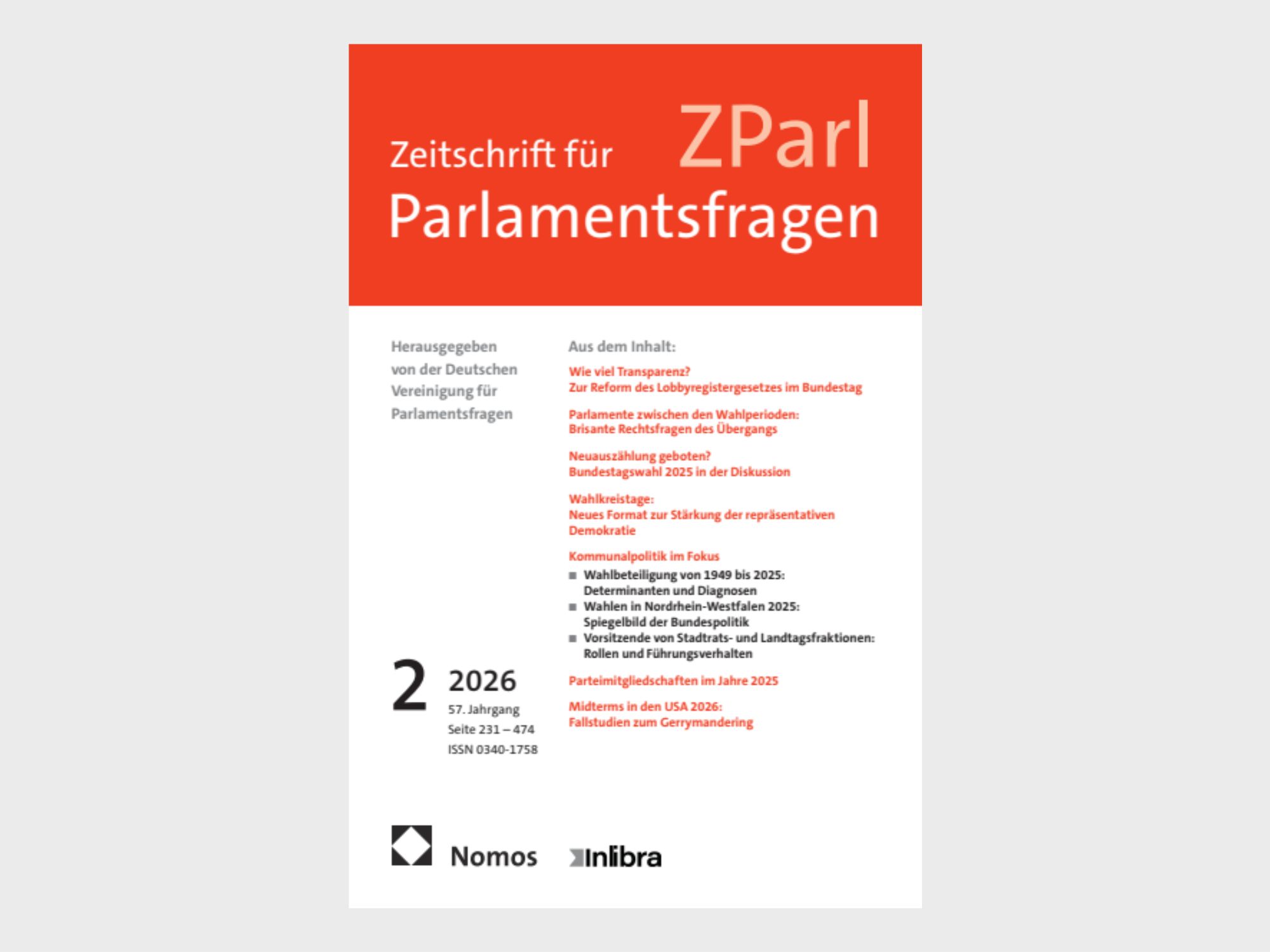
Parliamentary work is shaped among others by case law divsed from court decisions. Kevin Settles documents the parliamentary jurisprudence of the sixteen state constitutional courts between 2018 and 2023.
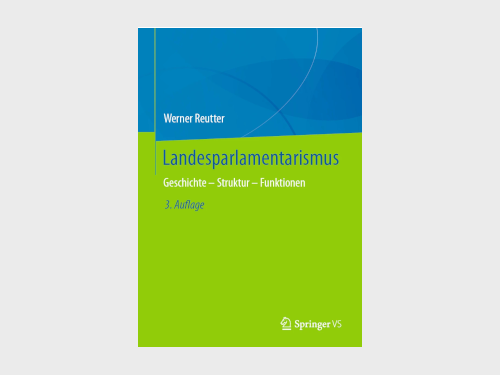
Does state parliamentarism work differently in Berlin than in Bavaria? Answers to these and many other questions are collected in Werner Reutter's new anthology on state parliamentarism. Among many other authors, Danny Schindler and Suzanne Schüttemeyer have taken a closer look at the Brandenburg state parliament and Franziska Carstensen at the state parliament of Saxony-Anhalt.
In view of new coalition options and necessities, internal party processes are becoming increasingly important when forming a government. In their article for the Zeitschrift für Politikwissenschaft, Oliver Kannenberg and Danny Schindler analysed the decision-making process of the Berlin SPD after the 2023 repeat election - from a power-political perspective and from the point of view of inner-party democracy.
Sign up to receive updates, promotions, and sneak peaks of upcoming products. Plus 20% off your next order.